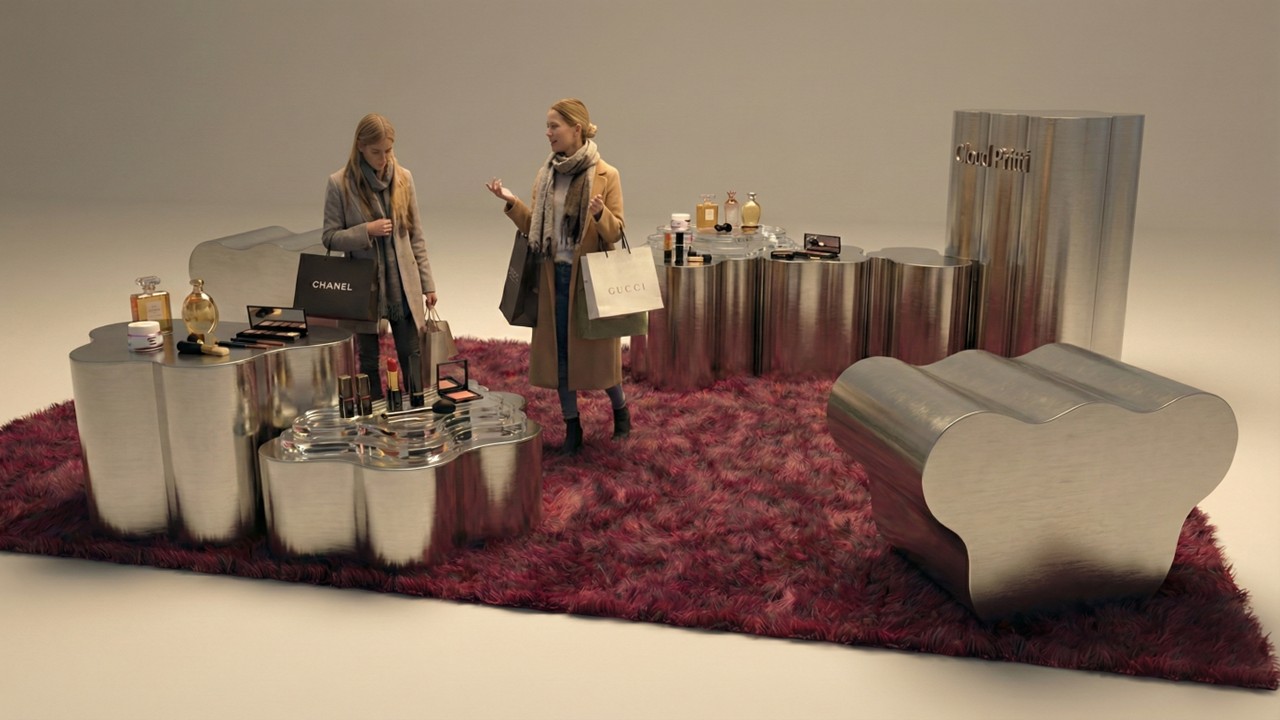
Location : Shinsegae Dept, Uijeongbu-si, Korea
Principal use : Beatuty Device Pop-up store
Build area : 33m²
Client : BE-ENVOL BIOTECH
Completed : June, 2025
The project translates skin-like contours into form, applies a particle-aggregation logic to generate blob modules, and realizes them as a layered, topographic display system for the space.
Motif Extraction & Form Logic
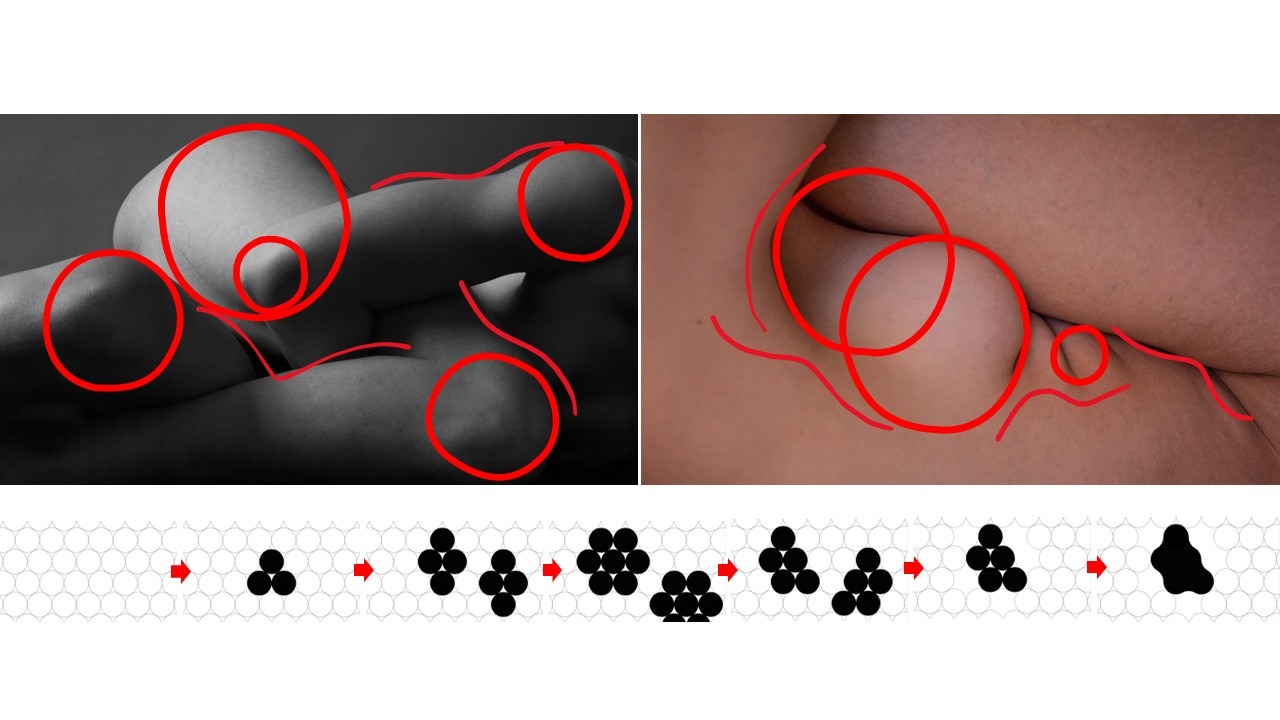
We began by observing the body as a landscape—skin shaped by pressure, contact, and folds. Key volumetric “nodes” were captured as circles, while the continuous flow between them was traced as contour lines. In parallel, we defined a generative rule: particles (circles) gradually aggregate into clusters and ultimately condense into a single mass. This established a dual foundation—sensory softness (skin contours) paired with a systemic growth logic (aggregation)—as the formal rationale of the project.


2D Silhouette Family & Modular Vocabulary
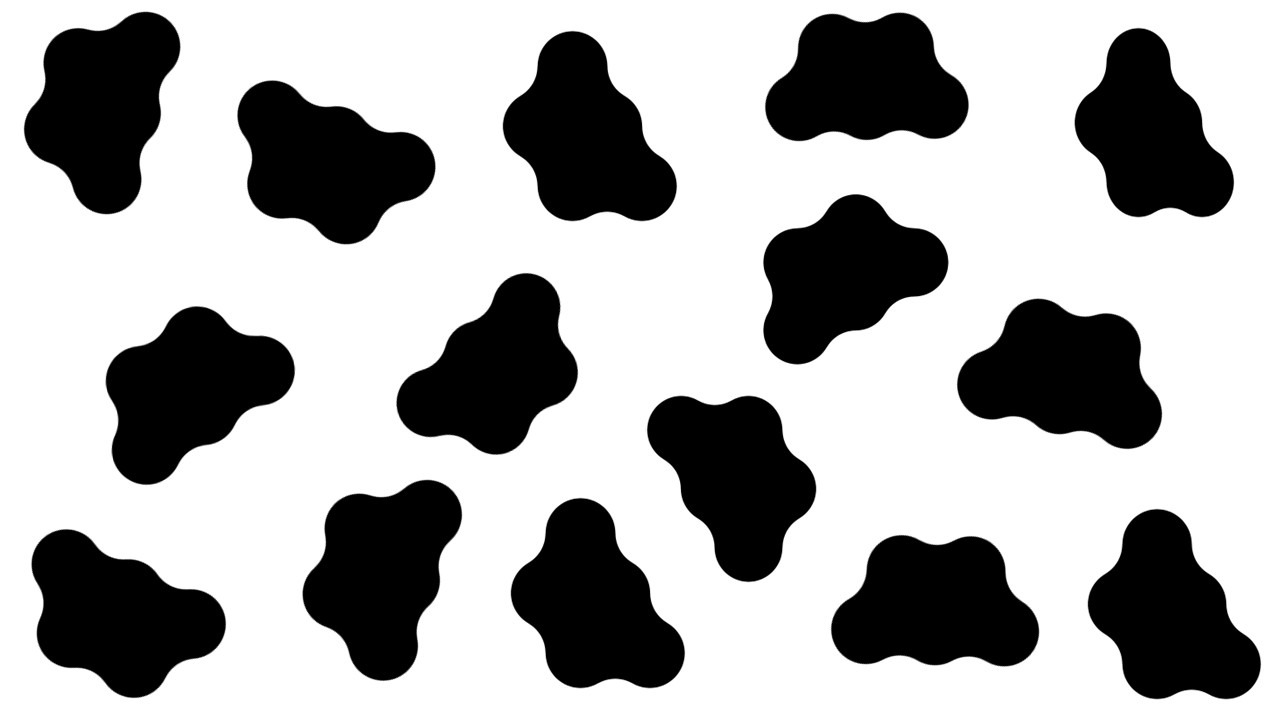
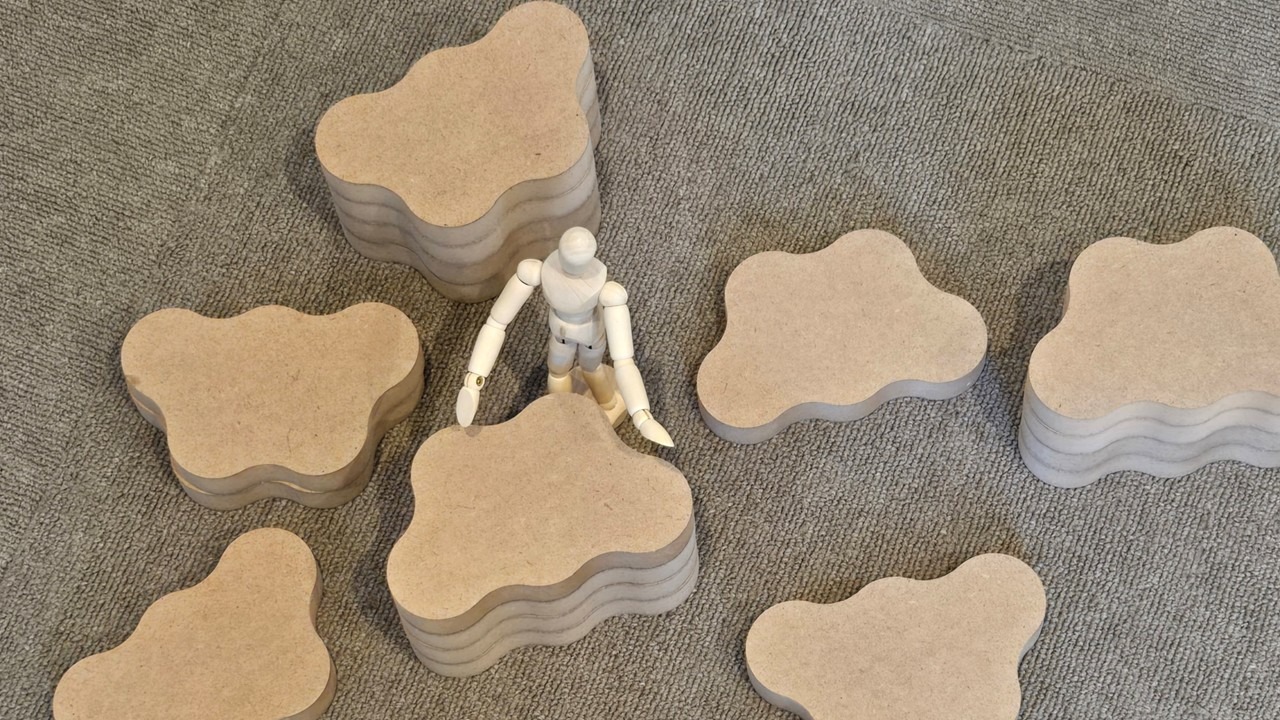
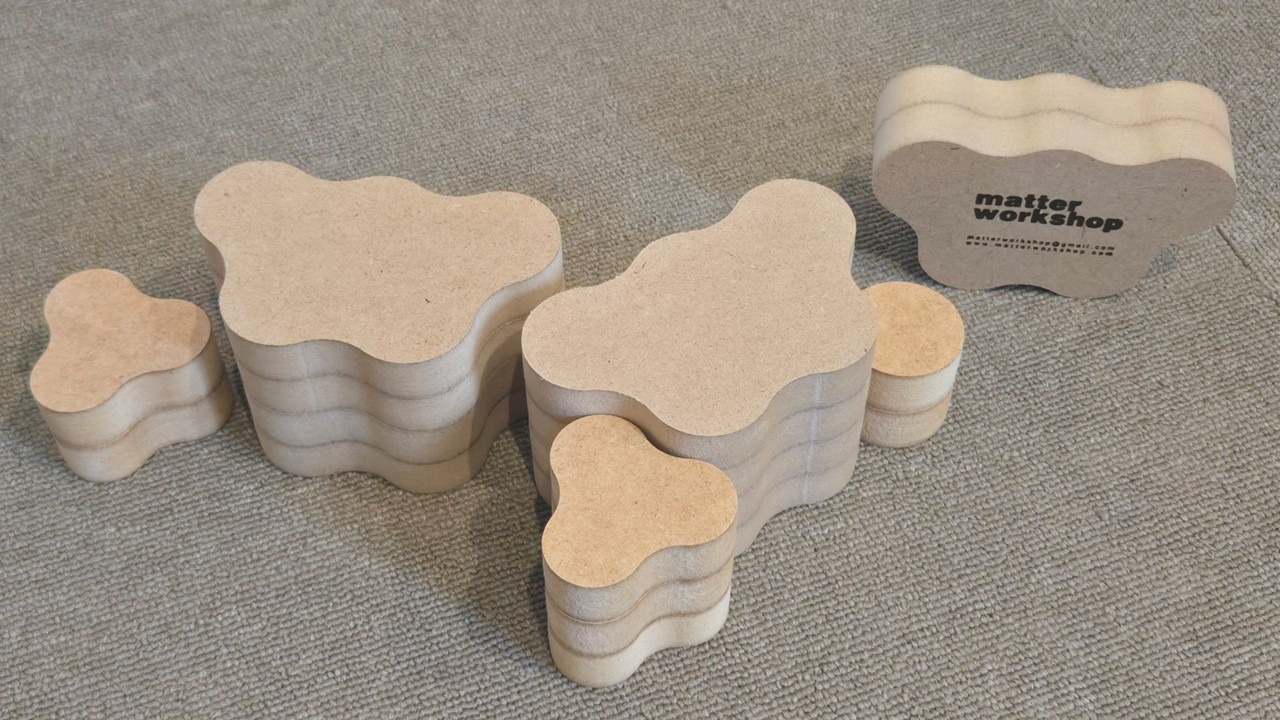
Using the aggregation rule, we translated clustered particles into a controlled blob silhouette with continuous curvature and no abrupt breaks. Rather than fixing one “final” shape, we developed a family of silhouettes—varied in footprint, proportion, and direction—while maintaining consistent DNA. This family became a modular vocabulary designed for “free composition”: units could be rearranged and recombined depending on site conditions, while still reading as one cohesive system.
Physical Mock-up: Scale, Layering, and Usability Tests
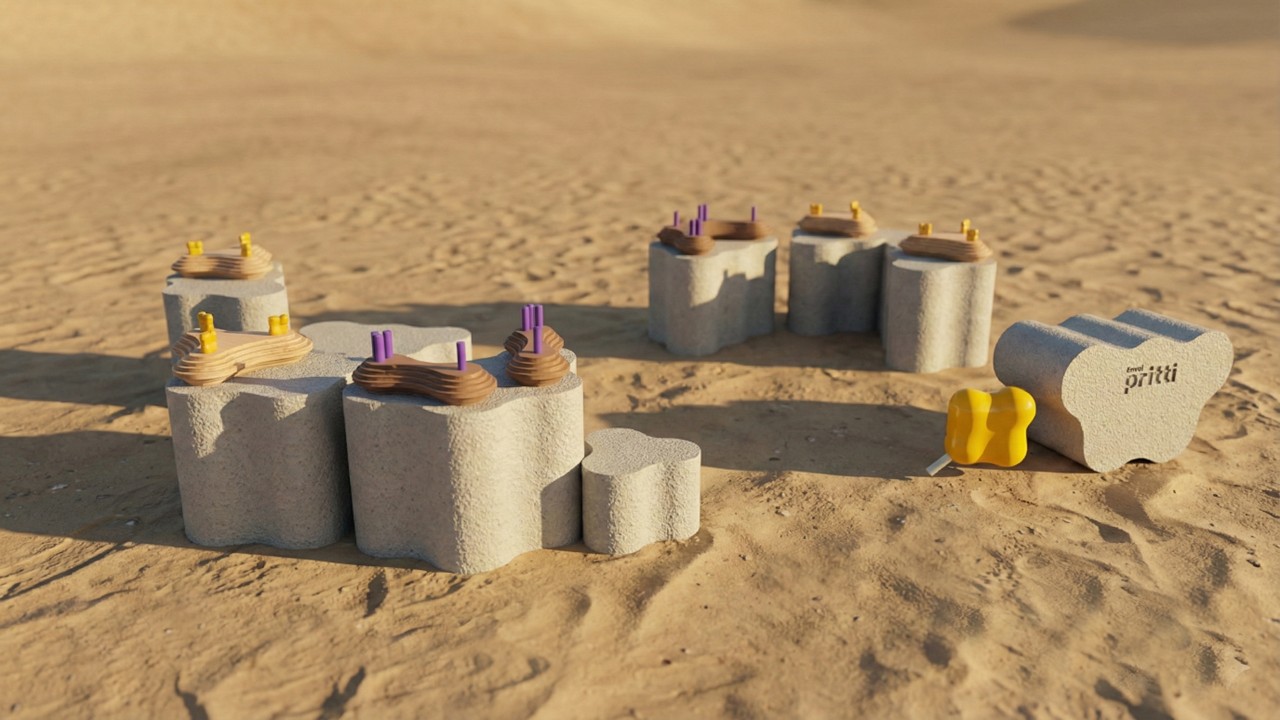
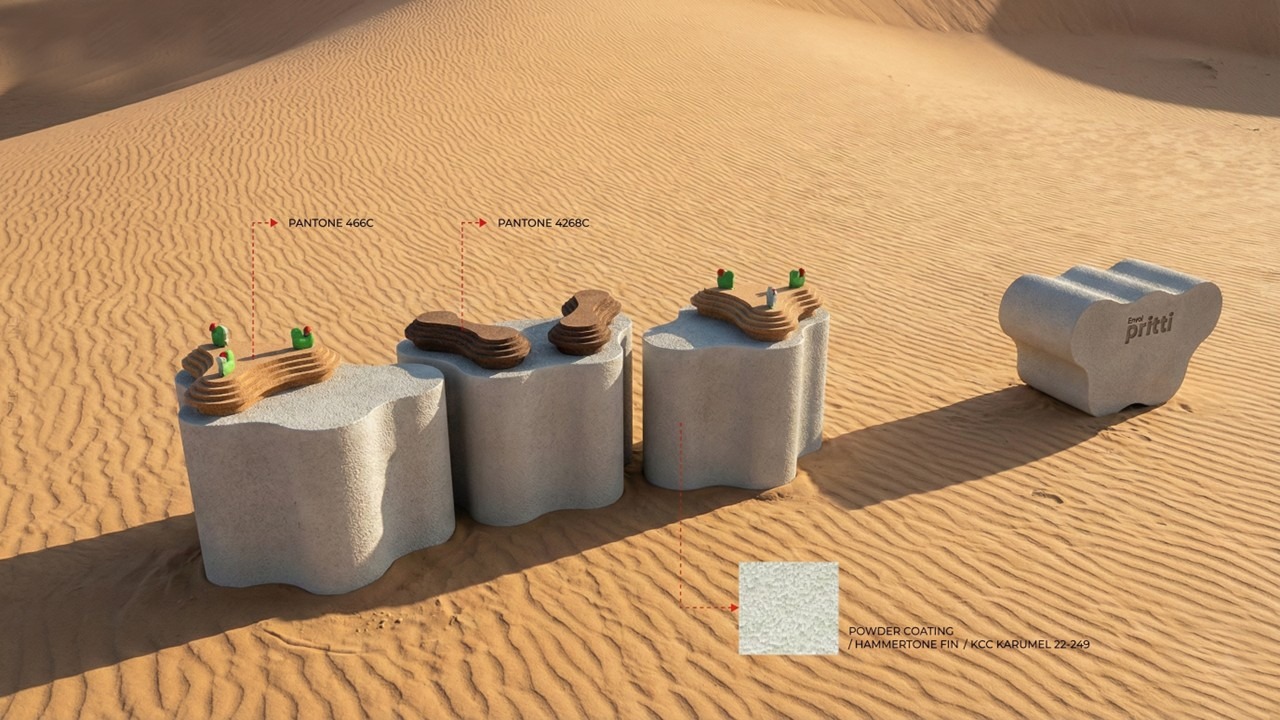
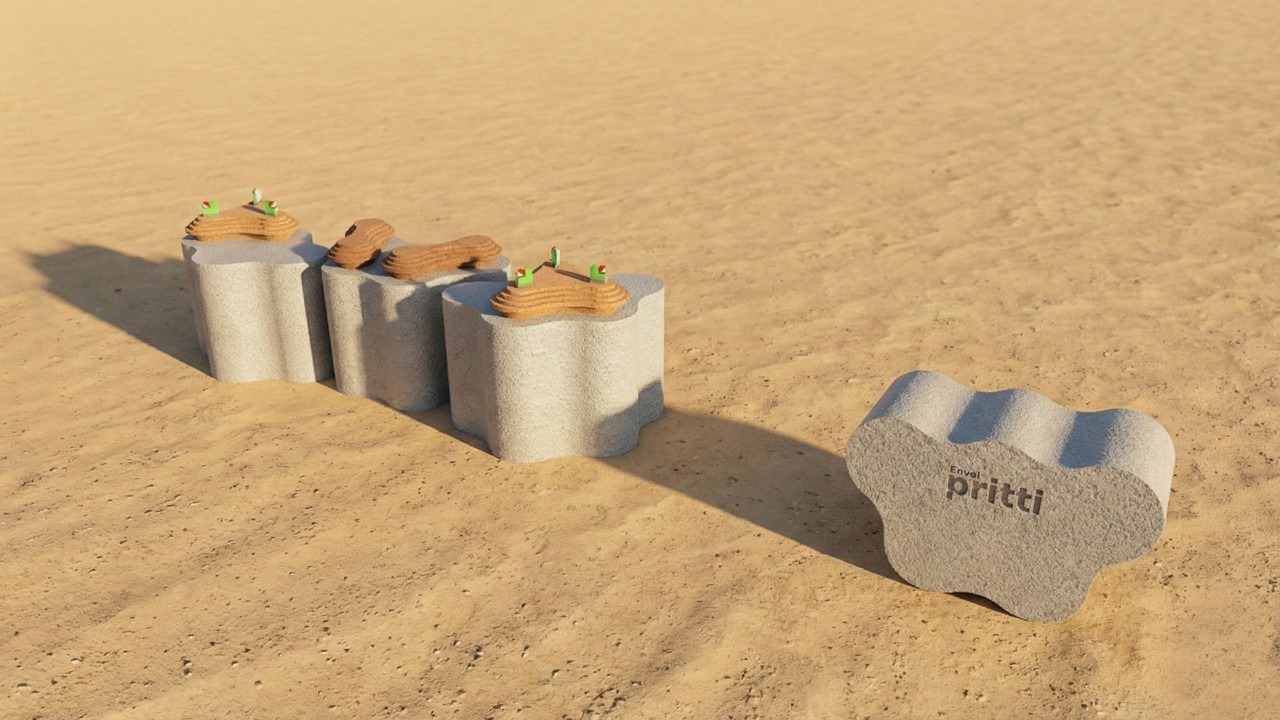
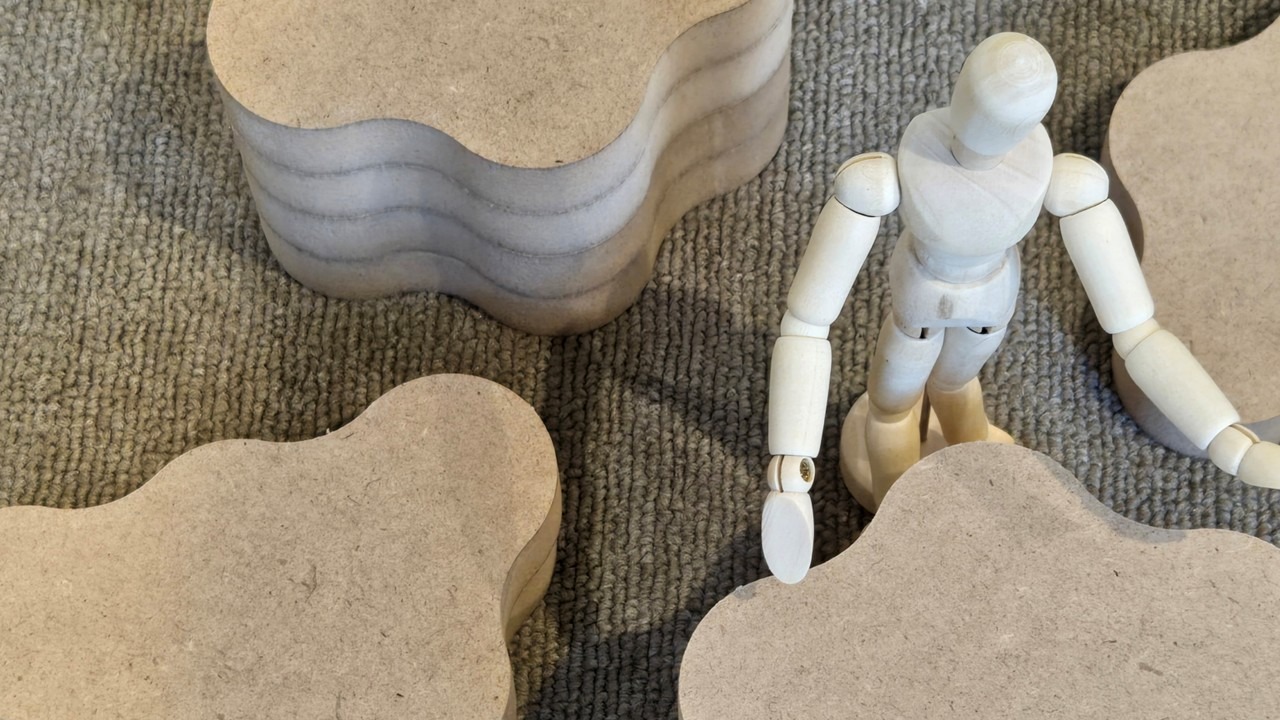
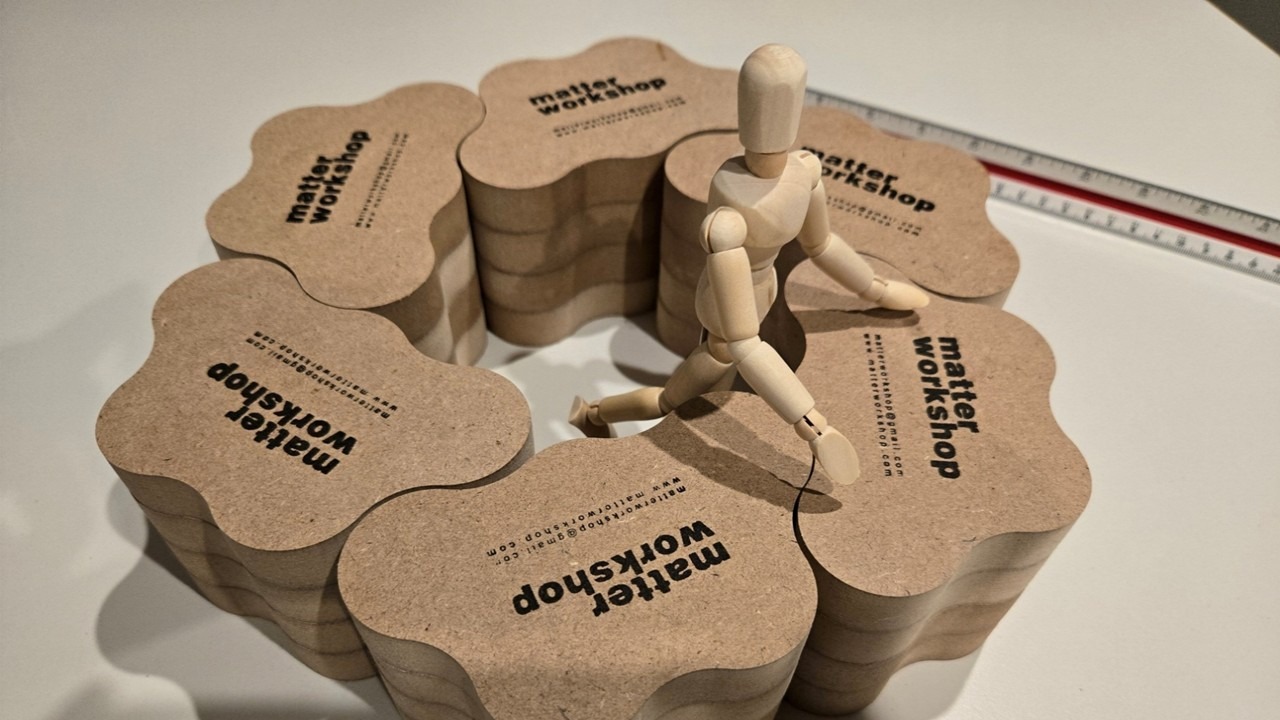
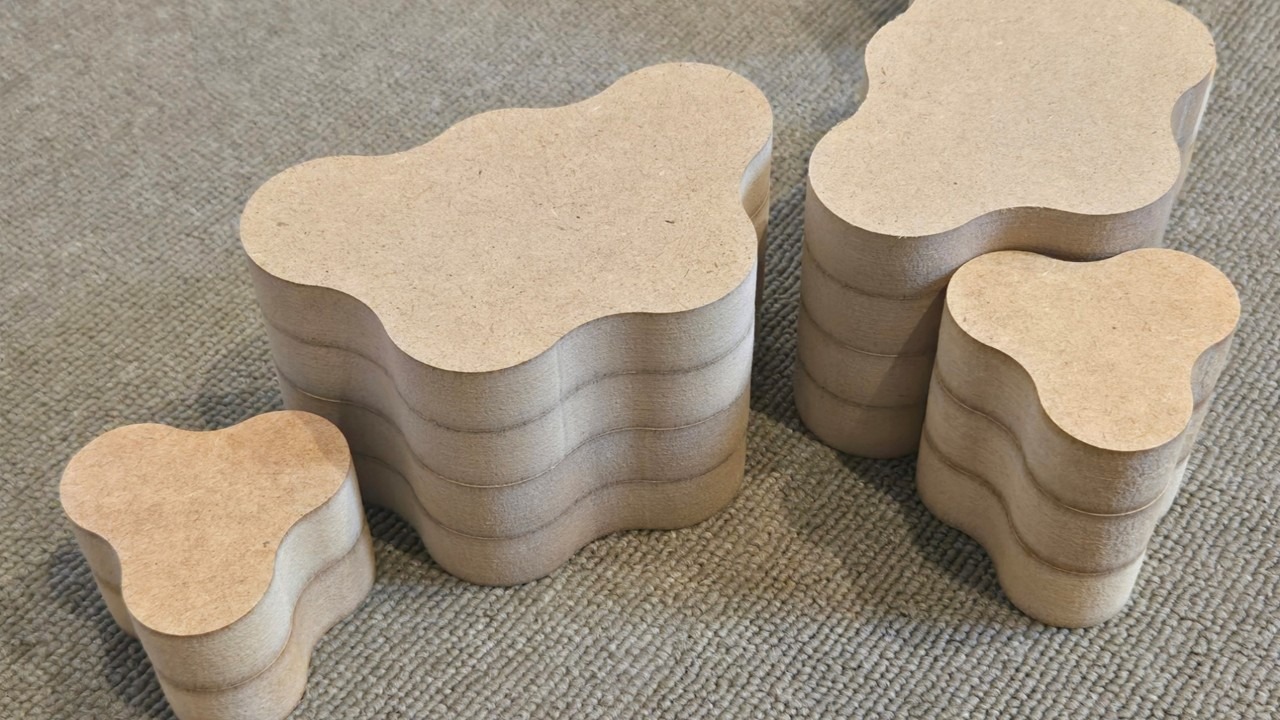
Next, the 2D silhouettes were converted into three-dimensional prototypes through stacked layers—an explicit translation of contours into topographic strata. This method reinforced the concept while offering a practical way to control height hierarchy across modules. A human-scale figure was introduced to verify reach distance, display height, and comfortable spacing between units, while also checking stability and base proportions. At this stage, the objects shifted from abstract forms into functional display furniture.
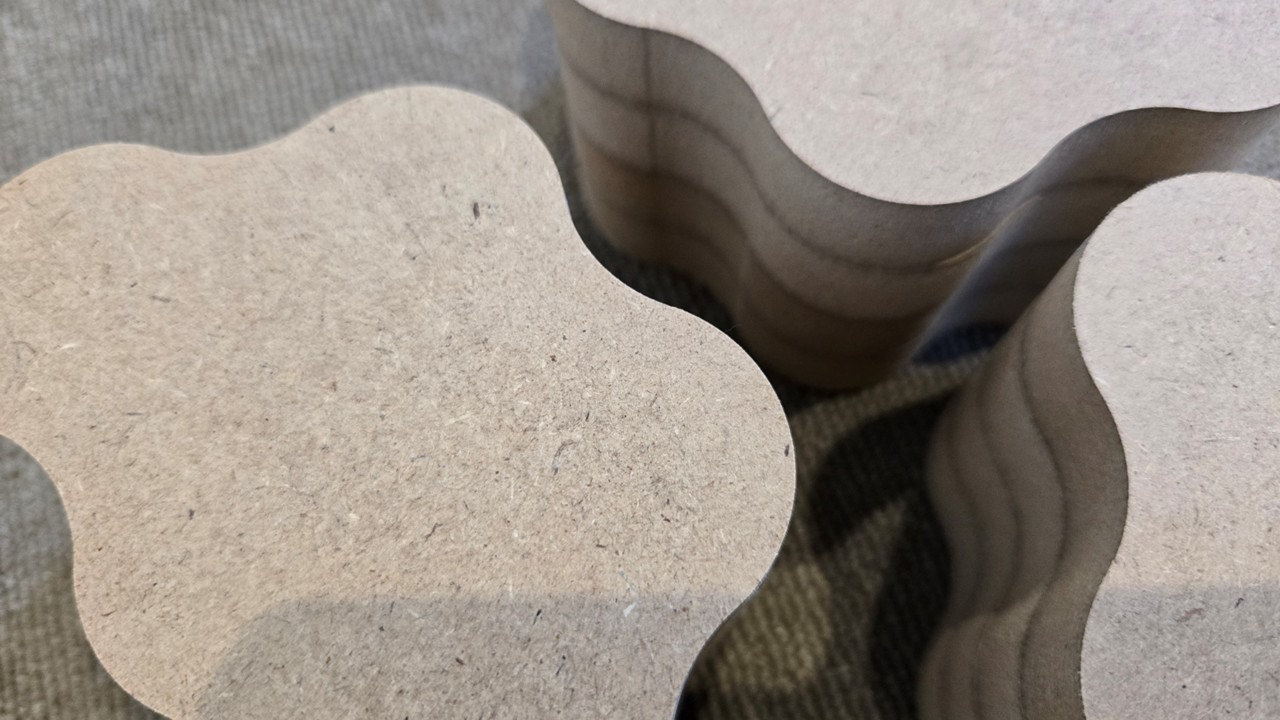
Material & Fabrication Prototype Refinement
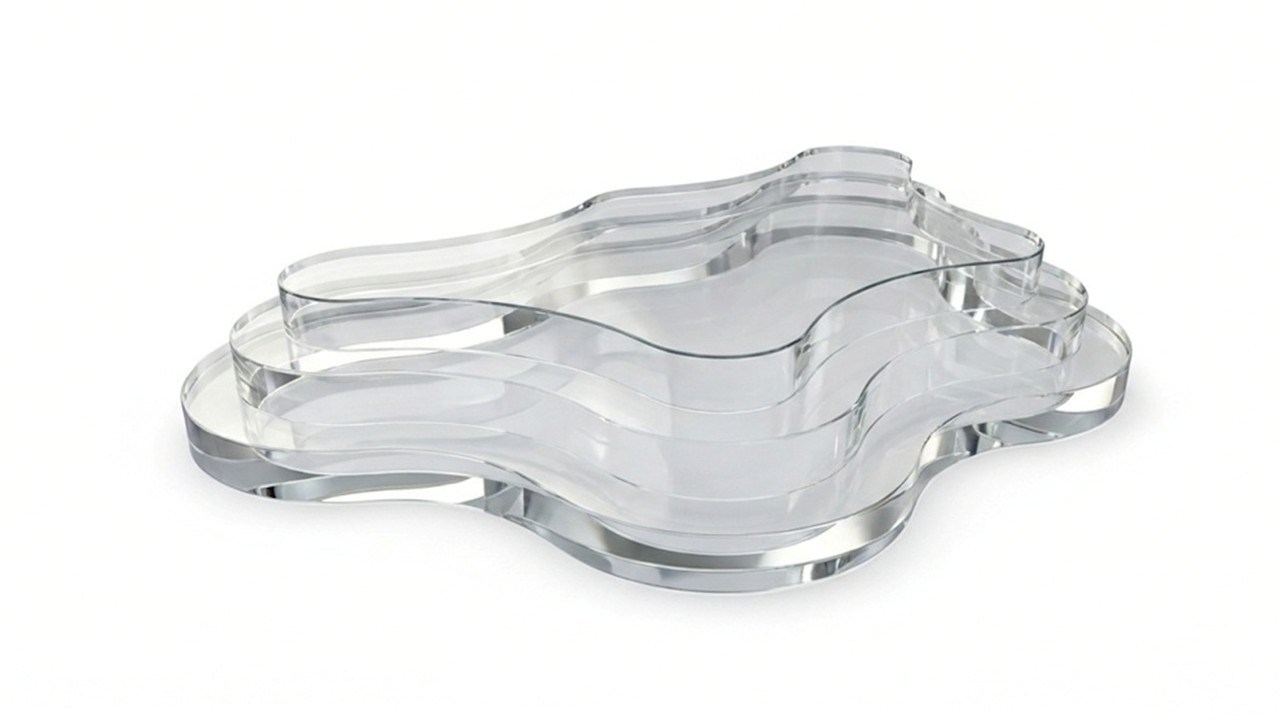
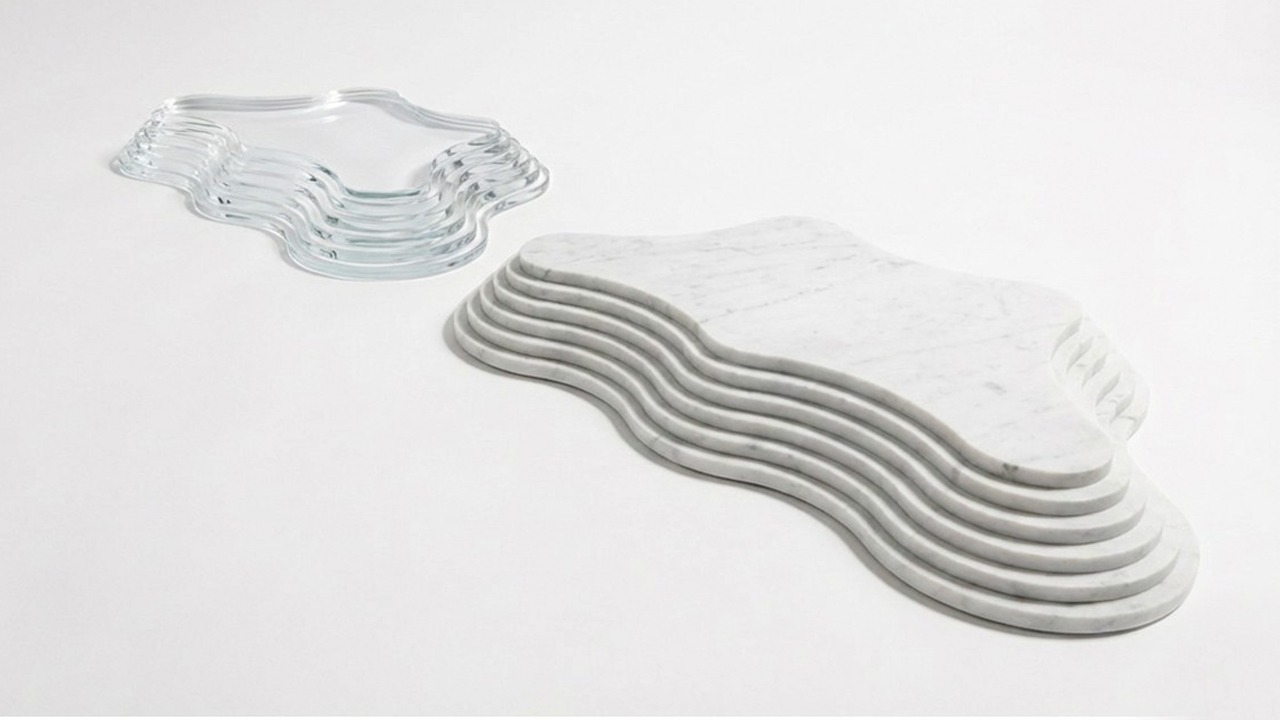
With geometry validated, we explored materiality that could carry the same contour-layer language with greater precision and premium tactility. Stone and transparent materials were tested to study edge radii, step depth, surface continuity, and how light interacts with layered profiles. These prototypes functioned as fabrication studies—confirming tolerances, finishing strategies, and the visual “read” of strata—so the form would remain crisp and intentional at full scale.
Spatial Application: Zoning, Display System, and Final Atmosphere
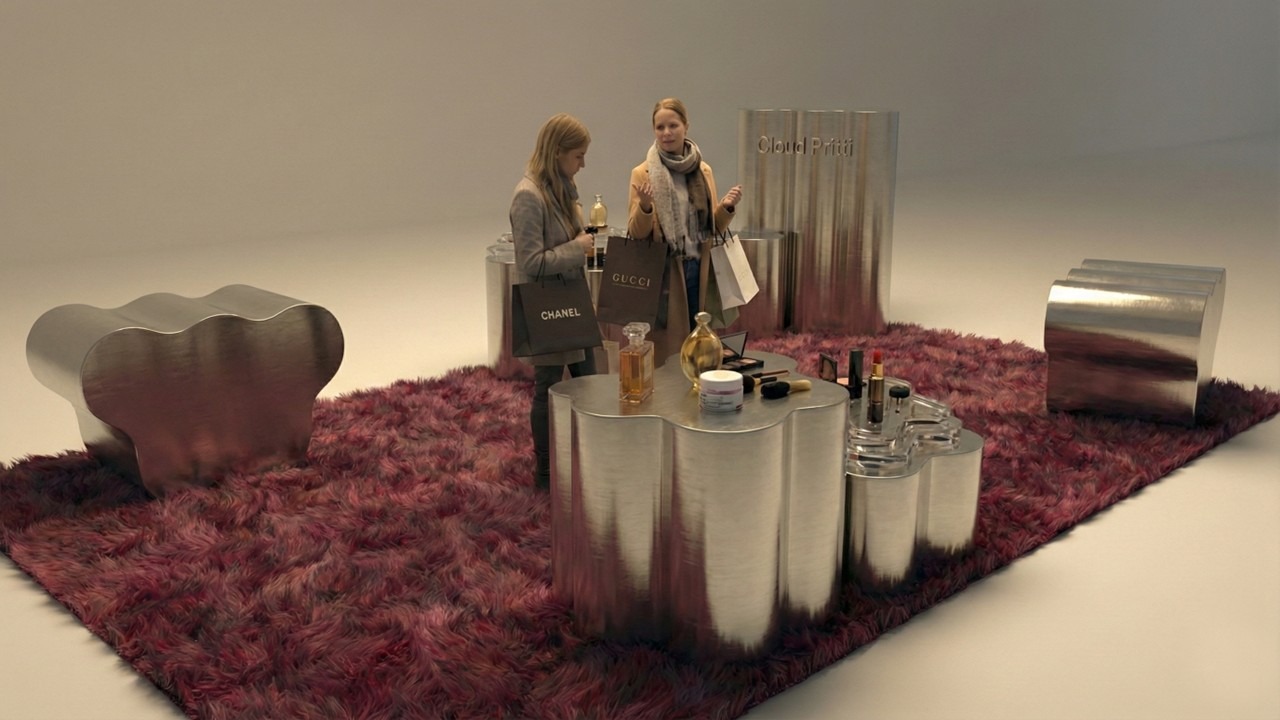
Finally, the modular family was deployed as a spatial system: clustered pieces created a main engagement zone, while dispersed elements extended rhythm and circulation across the footprint. Flat top planes and terraced steps were tuned to support product display, and a larger mass was positioned as a landmark/signage element to anchor the scene. A reflective metallic finish amplified presence and elevated the overall mood, allowing the soft geometry to contrast with sharp material clarity. The result is a coherent pop-up environment where form, function, and visitor flow are integrated into one operational display system.